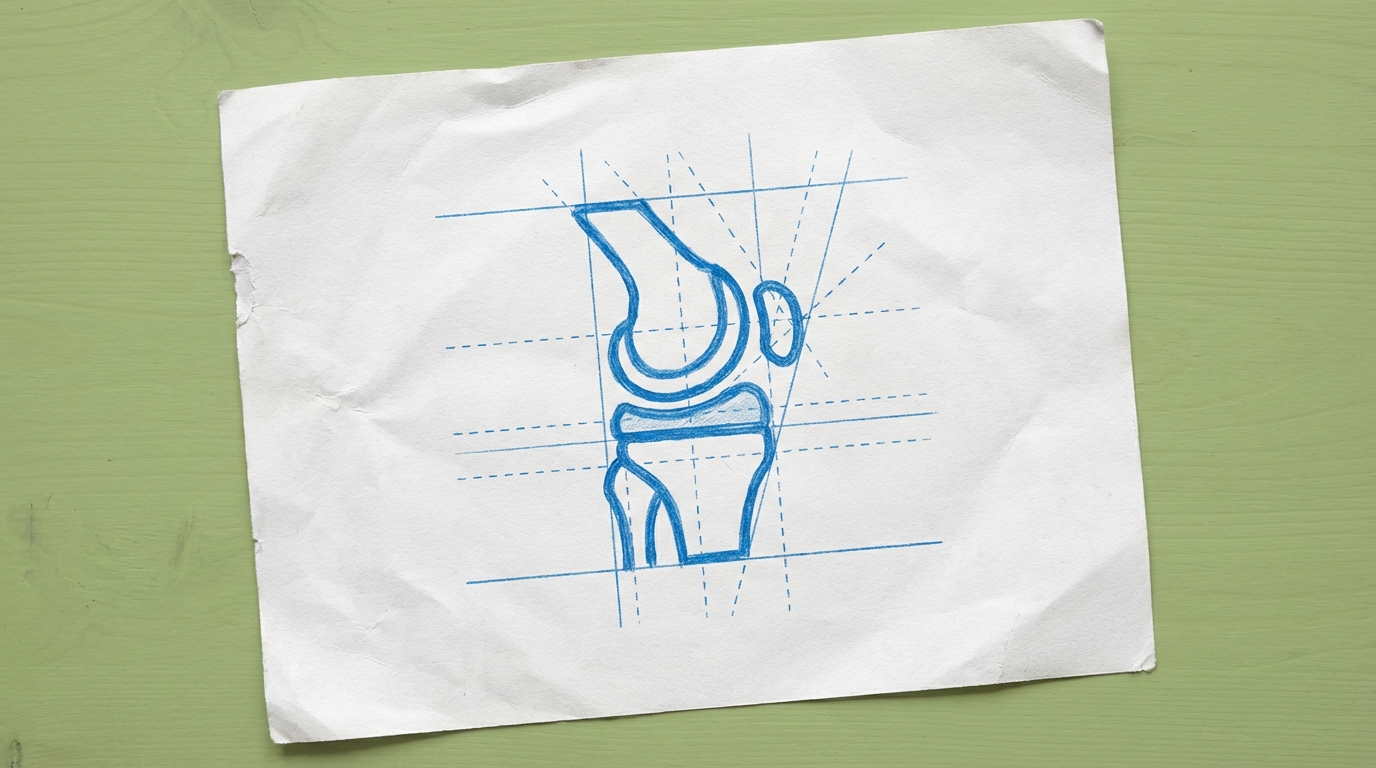
Some individuals experience persistent pain after a total knee replacement surgery, also known as total knee arthroplasty (TKA). This can be a difficult condition for doctors to manage. One possible explanation for this pain is that nerve endings may remain in the layer of bone located just underneath the joint, called the subchondral bone. These remaining nerves could continue to send pain signals.
Previous anatomical research suggested that to block pain signals from these specific nerves, injections should be aimed at the middle sections on both the inner and outer sides of the lower thigh bone. This case report details a different injection method that successfully relieved pain in a patient who did not respond to the standard technique. The new method involved injections at the level of the epicondyles, which are the bony bumps on either side of the end of the thigh bone.
The report focuses on an 84-year-old female who had a right total knee replacement in 2023 due to severe osteoarthritis but continued to have pain afterward. To determine if she would be a good candidate for a procedure called radiofrequency ablation (RFA), which uses heat to disable nerves for long-term pain relief, she first underwent a test called a diagnostic block. This test involves injecting a numbing medicine to see if it temporarily stops the pain.
In her first diagnostic block, the patient received injections at the "classical," or standard, locations. At each injection site, 1 milliliter (mL) of a contrast dye was used to ensure correct placement, followed by 1 mL of 0.5% bupivacaine, a local anesthetic. This procedure did not provide any pain relief for the patient.
The patient then received a second round of diagnostic blocks using a modified technique. In this new method, two injections were administered into each of three different areas of the knee: the upper-inner area (superomedial quadrant), the upper-outer area (superolateral quadrant), and the lower-inner area (inferomedial quadrant). After this second procedure, the patient reported complete (100%) pain relief that lasted for five hours. Because this test was successful, she has been scheduled for the radiofrequency ablation procedure.
This case shows that a modified injection protocol for a genicular nerve diagnostic block provided pain relief for a patient with persistent pain after a knee replacement, even after the standard injection technique had failed. This outcome suggests that a different injection strategy may be required to correctly identify which patients with pain after knee replacement would benefit from joint denervation procedures like RFA. Further anatomical and clinical studies are needed to explore this possibility.